• 4 of 100 Stories •
by Diane Payne, Principal of BHS from 1991 to 2005
One of the outstanding leaders of our country told our students about the importance of service and how fortunate they should feel to have the opportunity, as high school students, to give back.
In early February 1994, Superintendent Bill McNeal called me and said a special person would be in Raleigh that month and wanted to meet with a small group of students. He would not tell me who the person was, saying the guest didn’t want a lot of publicity.
I told the superintendent it would be very difficult to choose just 25 students for this very special meeting. I suggested we have an assembly in the gym so all the students could hear him. Although the superintendent wasn’t at all confident the guest would agree, he said he would ask and let me know.
To our mutual surprise and delight, the special guest agreed to meet with the entire school! The superintendent still wouldn’t tell me the name of the guest!
On February 22, 1994, all Broughton High School students and faculty reported to the gym for an assembly with a special guest whose name they did not know. Of course, there was speculation and excitement about the mystery guest!
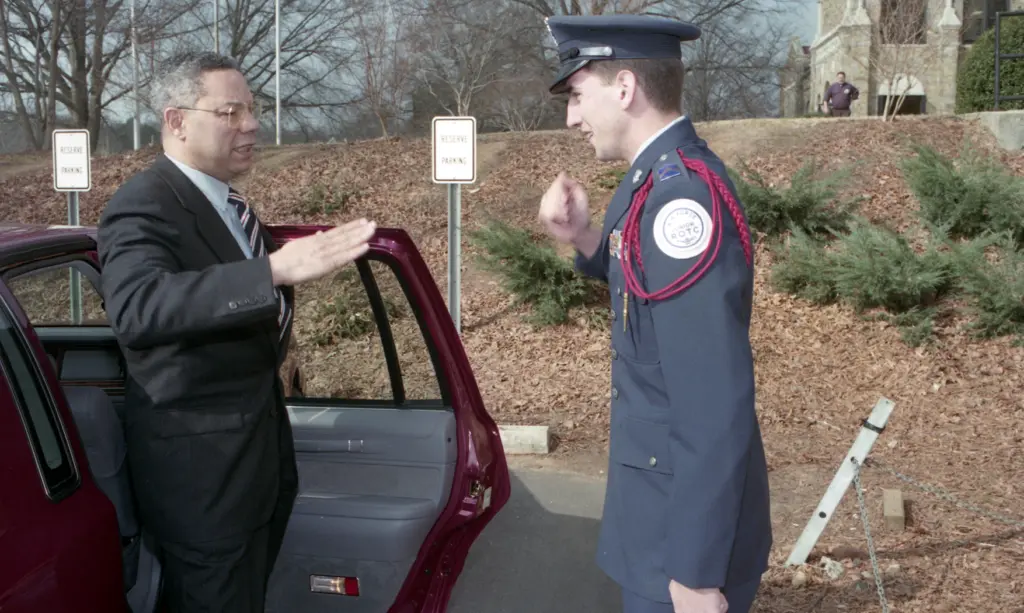
Colin Powell, the 12th chairman of the Joint Chiefs of Staff, and later the 65th Secretary of State, arrived at Broughton, and we met in my office to discuss the plan for the assembly. Suddenly, Colin Powell’s nose started bleeding! We tried numerous ways to stop the nosebleed, but without success. As the minutes went on, I thought about the fact that we had a guest whose nose would not stop bleeding and 2100 students in the gym waiting with anticipation! What should we do?
Although disappointed, I told Colin Powell that we would cancel the assembly. I told him that his health was the most important consideration and assured him the students and staff would understand. Colin Powell said he wanted to wait a few more minutes before canceling; he didn’t want to disappoint the students. Thankfully, his nose finally stopped bleeding!
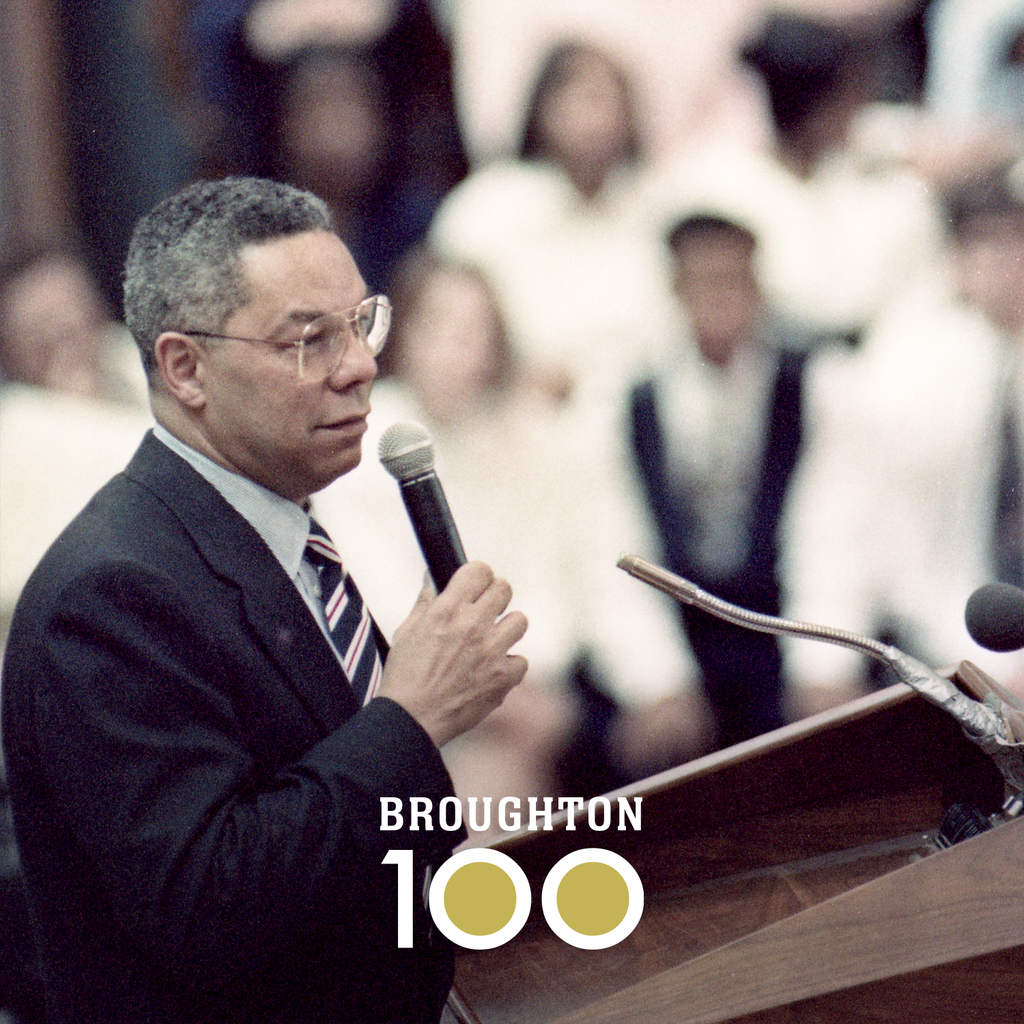
We walked into the gym as the band played patriotic music, and the audience stood up and applauded when they saw that the special guest was Colin Powell! The students were spellbound as he made his remarks. And then Colin Powell asked the students if they had any questions for him!
The students asked excellent, thought-provoking questions, but the final question gave me pause. A student asked what he thought of requiring students to perform community service as a graduation requirement. (The school board had recently approved our request to require students to perform 25 hours of community service each year they attended Broughton. Not every student was thrilled with the additional requirement!)
Colin Powell told students he was a strong proponent of community service and gave compelling reasons why students should willingly give back to their community. One of the outstanding leaders of our country told our students about the importance of service and how fortunate they should feel to have the opportunity, as high school students, to give back.
February 22, 1994, was a very special day for Broughton High School and one I will never forget. We were honored to have a man who has given so much to our country take the time to speak with our students.
Several days after his visit, I received a handwritten note from Colin Powell thanking me for allowing him to talk to our students! Of course, I still have the note and will treasure it always!
Thank you, Colin Powell!
The community service program at Broughton High School was established during the 1994–1995 school year under the leadership of Diane Payne, Principal; Sandra Coats, Teacher; and Jayne VanGraafeiland, Coordinator, Community Service Program. The program is designed to teach citizenship skills and the value of serving others.
Students must complete 25 hours of community service each academic year they are enrolled at Broughton. Hours must be performed with a non-profit agency, a registered 501(c)(3), such as public schools, public libraries, food banks, or other civic organizations.
Each year, Broughton students provide thousands of hours of community service both on campus as well as in the surrounding community through a combination of hands-on projects and donations. Homecoming Week sees the Broughton community supporting the Food Bank of Central and Eastern North Carolina’s Students Against Hunger. January sees the Broughton community come together and support the Kay Yow Cancer Fund with a Play 4 Kay event. Caps for the Community Club spearheads the Queen of Hearts fundraiser each year, letting the student body vote on which local organization will benefit.