
• 2 of 100 Stories •
by Katherine Snow Smith, Class of 1986
Whether they were an academic star or someone who listed study hall as their favorite subject, every Broughton High School student had at least one teacher who saw their unique strengths, ignited an interest, and left a lasting mark.
For this second of 100 blog posts counting up to Broughton’s centennial, I interviewed three English teachers whom many alums recall as that standout instructor.

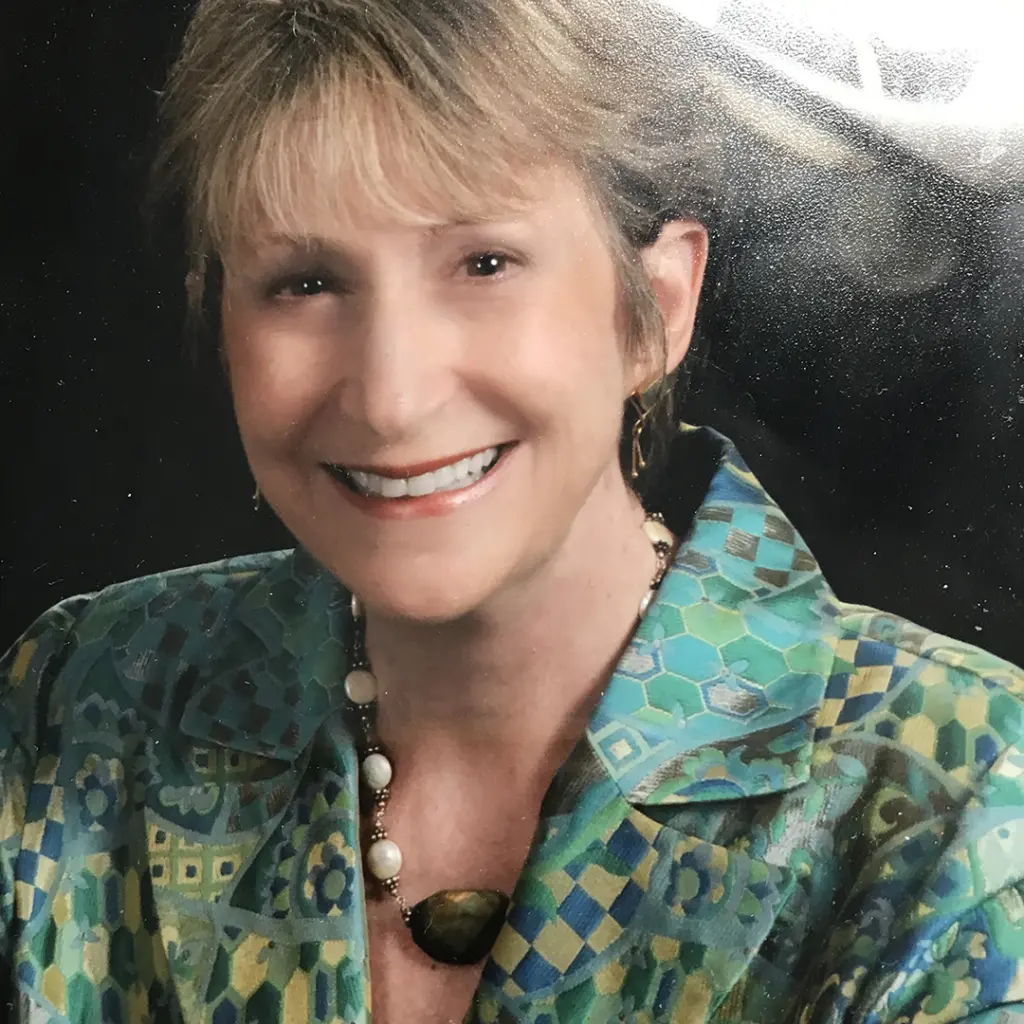

Babs Nichols, who started at Broughton in 1985, will be welcoming students again in the fall for her forty-second school year. In 2014, The Huffington Post shared her essay on why she continues teaching with a national audience.
“I stay because I laugh and learn every day. Your children are funny, insightful, and brutally honest. If my shoes don’t match my outfit, they tell me. If my argument that Invisible Man is an important twentieth century classic doesn’t convince them, they tell me,” she wrote.
Her dedication to students is a hallmark. When she grades a paper, Ms. Nichols covers it with comments — not just corrections but more so with detailed reactions and insightful questions. She fosters academic success as well as students’ wellbeing.
“I will find myself often saying things like: ‘Make sure you go outside every day. Make sure you get some sleep. Make sure you get some exercise,’ ” she says. Her tenure at Broughton gives her a perspective of what’s endured and all that has changed — from students’ perceptions to the impact of cell phones.
“I’ve taught The Great Gatsby 41 times,” she says. “In 1985, a lot of kids thought Jay Gatsby was very romantic with his obsession with Daisy. In 2025 they’re like: ‘That dude was a stalker.’”
As technology, from Grammarly to AI, lessens the need for students to master the intricacies of grammar, prescribed curricula place less emphasis on it. While most teachers address it as needed within the bigger context of writing, Nichols calls herself a “dinosaur” for still teaching designated grammar lessons. She knows it’s essential for acing college entrance exams and competing for competitive schools and scholarships.
Ms. Nichols has shared big and small milestones with her students. She felt the unanimous pride when Broughton hosted its first home football game and saw the advent of the block schedule, the new science wing, and the breathalyzer at Queen of Hearts.
With a flatscreen TV in every classroom, many teachers turned on the live coverage of 9/11. At first it seemed like a horrible accident and Nichols continued teaching, but after the second plane hit the South Tower, all eyes were fixed on the screen.
“We watched the second tower collapse,” she recalls. “You could hear a pin drop.”
Sylvia White, who taught English at Broughton 1984 to 1987, made such an impact on students she was named Wake County Teacher of the Year and NC English Teacher of the Year.
I was one of those students. It was in Ms. White’s class that I learned to question authors’ motives and society’s expectations as well as question Ms. White and myself. A friend recently told me she kept her maiden after marrying because that’s what Ms. White did.
“I had always been insulted by how women became ‘Mrs. Edward Jones,’ for example. Not only did they lose their last name, but their first name too,” Ms. White says. “In graduate school I studied British law and learned women were considered property. As ‘Miss,’ you were property of your father and ‘Mrs.’ designated you were property of your husband.”
She says she always strived to relate to students on their level and build trust. She showed us how Wuthering Heights, a 1700s romance on the foggy moors of England, still resonated with modern life centuries later by playing Pat Benatar’s hauntingly beautiful song by the same name. (I found it online for my daughters when they read the book.)
“One of my main goals was to foster a love of reading,” she says. “I often used journaling prompts. If a book was about personal challenges, I’d have students write for 15 minutes about their own personal challenges.” Journaling was a key part of her approach to make us better writers. We had assigned topics as well as the freedom to write about anything.
“I didn’t grade on the quality of the writing, but the process. They would turn in their journals and they could choose three different entries they didn’t want me to read and turn down the corners and I promised not to look,” she says.
At the end of senior year she assigned us the task of writing letters to our future selves including our hopes and concerns as we were leaving high school. Five years later we received each letter in the mail.
“I thought it would be cool for these children coming into adulthood to read a letter from their childhood self,” she says.
When I received my letter a year after college graduation and already into my second job, I saw my priorities that had changed and what endured. I remember thinking how different my life was already from what I predicted just five years earlier. But that was okay. I think Ms. White was still trying to teach me something important, something that still serves me today.
My mother, Nancy Snow, taught English, public speaking, and drama at Broughton from 1958 to 1964. For decades, whenever I meet one of her former students, including parents of my classmates, they say she was a favorite teacher. Many give her credit for becoming a confident public speaker, which enabled career success.
In the early 1960s, Raleigh began slowly integrating schools through a gradual “freedom of choice” plan. Broughton’s principal, Joseph Holliday, asked my mother and a few other hand-selected teachers if they would be willing to teach Black students.
“I said: ‘Of course.’ Most of us did. One math teacher he asked said she wouldn’t teach them,” my mother, age 94, recalls. “It was heroic of these students to come to Broughton.”
Mrs. Snow is also known for directing some of Broughton’s first full-scale musicals, including Oklahoma in 1962. A sold-out crowd paying $1 a ticket filled the auditorium two nights in a row. The production received a two-page spread of coverage in The Raleigh Times.
“The wonderful thing was everybody was involved. The phys-ed teacher worked with the girls on the dance for ‘Everything Is Up To Date in Kansas City.’ We had a wonderful music teacher, Mrs. Freeman. The wife of someone who worked in the office played the piano,” she says. “Students painted sets. Mothers made costumes. Our friend Grady Cooper knew somebody in Durham with a surrey with a fringe on top and he let us borrow it.”
My parents hosted a party for all students and faculty involved after the show at their new home in Brookhaven. It was the first integrated gathering in the all-white neighborhood.
I’ve also heard former students recount sitting in Mrs. Snow’s class on November 22 when Mr. Holliday announced through the wooden intercom speaker over the chalkboard that President Kennedy had been shot in Dallas and was dead.
Mrs. Snow cried, as did many students — male and female. She walked over to the bookshelf and pulled out a volume of A.E. Housman poetry, then read “To An Athlete Dying Young.”
The six-stanza poem begins with:
The time you won your town the race
We chaired you through the market-place;
Man and boy stood cheering by,
And home we brought you shoulder-high.
Today the road all runners come,
Shoulder-high we bring you home
And set you at your threshold down,
Townsman of a stiller town…” 1
Source:
- The Norton Anthology of Poetry Third Edition (1983)
I was lucky to have both Mrs. Nichols and Sylvia White (as an after-school writing coach) during my years at Broughton. I went to Duke already confident in my writing and critical thinking skills. I also have to shout out Mrs. Misenheimer and Mrs. Winzeler (who taught us journalism and made us read the muckrakers). Broughton was a great place to be an English student in the late 90s!
Thank you for sharing, Louise!
Great job with the stories and interviews, Katherine!
Keep up the good work–excellent writing as well 🙂
Thanks, Bob!
I can still remember sitting on Sylvia White’s porch and up her her attic that she converted into her room for her students. She really did foster my love of writing. I still write and encourage my yoga students and my three girls to continue to write no matter what it’s about!
Thanks for sharing!
This was a great article. I remember Mrs. Babs at Broughton. She was an awesome teacher and I’m very glad to see her highlighted here. My son is class of 2029 and I was class of 1998. GO CAPS!!
Thank you. Your son will be part of an amazing milestone! Go Caps!
Katherine, great job and thank you for taking the time to do this; I had Mrs White for honors English my Sr year; I signed up for honors English for probably all the wrong reasons, but with hopes of getting Mrs White as my teacher; I had learned that most of the cheerleaders along with several other attractive girls were taking this class, and I figured that I could at least get a “B” which would count as an “ A” for my GPA and maybe catch the eye of one of those girls; ; It’s no wonder she won teacher of the year, because I enjoyed her class so much that I actually forgot about my reasons for taking the class; she was great, kept attention all the time (except during the Canterbury Tales) … I loved being in her class; The envelope idea where we received out thoughts and ideas from 5 yrs early was one of the best ideas; hope all is well with everyone
Thanks for sharing!
Please do an article about the outstanding English teacher, Mrs. Peacock, who talk more than just English- She taught the years I was there from 1950 to 1954
Thank you,
BF Beasley Jr
Thanks for the suggestion, BF Beasley Jr!
Yes, BF Beasley Jr, Mrs. Phyllis Peacock definitely is the legendary and iconic English teacher supreme and head of the English department of Broughton High School for 26 years from 1949 through 1975. Perhaps one of the major American authors, Anne Tyler or Armistead Maupin, who once upon a time sat in her senior English class, would write an article about her for the “100 Articles”
Karen, Your message sent me down a rabbit of searching where I discovered more and more ideas for new content to showcase Broughton’s legacy of excellence.
Great ideas about engaging more authors: we are too late to hear directly from Reynolds Price, but maybe Anne Tyler or Armistead Maupin (both in their 80s) will share reflections. We’ll try to make that happen!